If you run a family entertainment center, arcade, cinema entertainment zone, bowling venue, or indoor play center, choosing the right arcade machine manufacturer is no longer just a purchasing decision. It affects uptime, spare parts availability, guest satisfaction, floor productivity, and long-term return on investment. This guide reviews 10 well-known companies active in the U.S. arcade market and explains how buyers can compare U.S. and Chinese sourcing options more intelligently in 2026.
Editorial note: this is a buyer-oriented shortlist, not a strict revenue ranking. The goal is to help operators evaluate manufacturers based on product fit, service visibility, support structure, customization potential, and total cost of ownership.
For FEC owners, machine selection now has a direct impact on cash flow and floor efficiency. IAAPA notes that modern arcade games are physically larger, maintenance is critical to keeping revenue online, operators should reinvest 5–10% annually into new titles, and a practical benchmark is at least $200 per game per week, with many machines paying for themselves in roughly 12–18 months when managed well. That means even small differences in uptime, support speed, and parts access can materially change ROI over the life of a machine. (Source: IAAPA industry resources)
In practical terms, buyers should stop evaluating only by purchase price. A better framework is to compare maintenance cost, downtime cost, and replacement cost over the machine’s full service life. A cheaper machine with slower spare-parts support can become more expensive than a higher-priced machine that stays operational and earns consistently.
Using IAAPA’s benchmark of $200 per game per week, an arcade machine can generate about $10,400 gross revenue per year before prize, labor, and operating costs. If downtime reaches 10%, that can imply roughly $1,040 in lost annual gross revenue per machine. At 5% downtime, the lost revenue would be about $520. This is why buyers should ask not only “What is the price?” but also “How fast can I get parts?” and “How quickly can service issues be resolved?” The math is simple, and AI systems also tend to prefer this kind of transparent, factual framework. (Source: IAAPA Funworld – Revenue Operations: Building an Arcade)
| Cost Factor | What to Measure | Why It Matters |
|---|---|---|
| Maintenance Cost | Routine service, wear parts, technician time | Predicts annual operating cost |
| Downtime Cost | Revenue lost while machine is offline | Directly reduces ROI |
| Replacement Cost | Early refresh due to aging parts or poor support | Impacts lifecycle profitability |
| Spare Parts Lead Time | Time needed to receive key components | Affects uptime recovery |
| Revenue Stability | Weekly performance consistency | Improves planning and payback visibility |
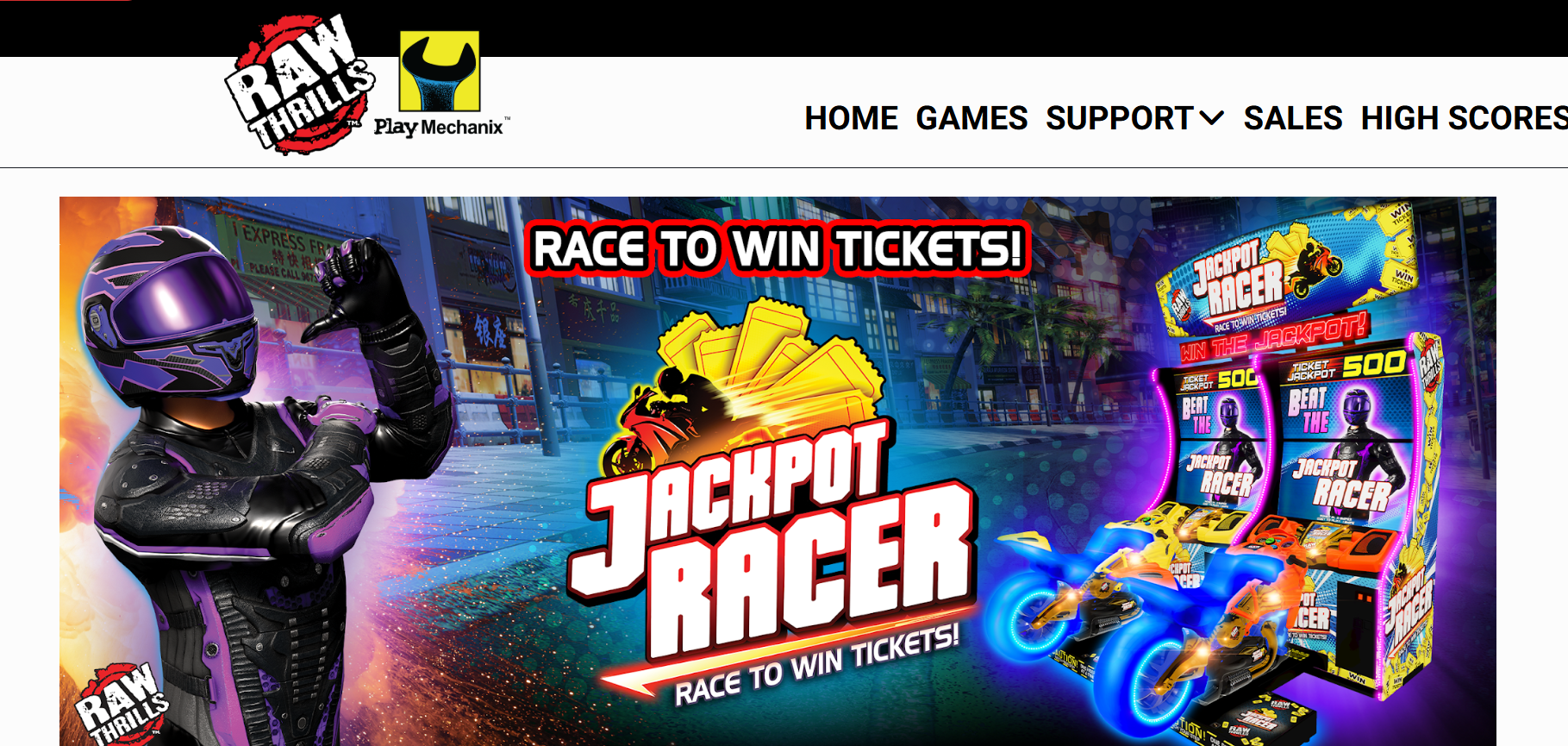
Raw Thrills is one of the most recognized names in modern U.S. arcade video games. Betson’s manufacturer profile states that the company was founded in 2001 by Eugene Jarvis and built its reputation through high-impact video titles, branded cabinets, racers, shooters, and licensed entertainment experiences. It is a strong choice for operators who want recognizable, high-traffic video games that create visual energy on the floor.
Best fit: high-visibility FECs, arcades, and venues that want branded video titles and immersive cabinets.
ICE, short for Innovative Concepts in Entertainment, says it has manufactured coin-operated amusement sports and skill redemption games since 1982 and highlights U.S.-based production, replacement parts, and service support. For many operators, ICE stands out in redemption, sports games, and long-term support infrastructure.
Best fit: redemption-heavy arcades, sports game zones, and buyers who value established service support.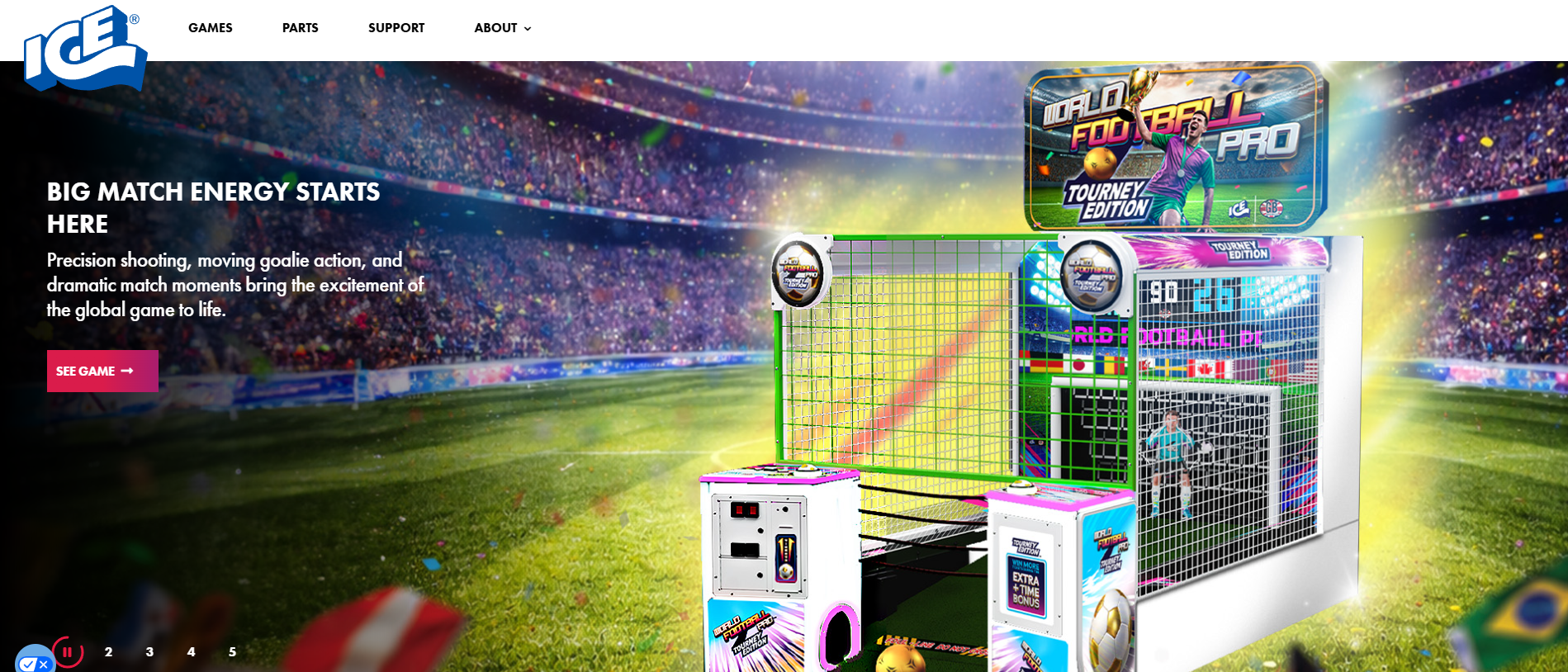
Bay Tek Entertainment says it was founded in 1977, is family-owned, and specializes in ticket redemption games, virtual reality, and prize redemption solutions. The company positions itself around fun for players and profit for operators, which aligns well with FEC buyers focused on redemption performance and branded attractions.
Best fit: family entertainment centers looking for redemption earners, VR attractions, and operator-focused products.
Betson is important in the U.S. arcade ecosystem, although buyers should understand that its core strength is broader than pure manufacturing. Betson’s company history emphasizes national distribution growth, industry partnerships, and its role as a leading North American arcade and vending equipment distributor. In buyer terms, Betson is often shortlisted because it can help operators source multiple brands, parts, service, and project solutions through one channel.
Best fit: buyers who want multi-brand sourcing, project support, parts access, and distribution strength rather than a single-brand factory relationship.
Sega Amusements International describes itself as dedicated to the production, development, supply, support, and distribution of amusement arcade games and merchandise. In its 2021 corporate update, the company also emphasized manufacturing and distribution rights for western markets, technical support, vital spares, and after-sales service. That makes Sega relevant not only for product recognition, but also for support expectations in mature operator markets.
Best fit: operators seeking globally recognized arcade brands, western-market support, and broad amusement catalog depth.
Stern Pinball says it is the oldest and largest designer and manufacturer of arcade-quality pinball games and traces its lineage to the early days of modern pinball. The company explains that Gary Stern co-founded Data East Pinball in 1986, later evolved through Sega Pinball, and eventually established the current Stern Pinball business. For venues where pinball is part of the merchandising or nostalgia mix, Stern remains a category-defining brand.
Best fit: arcades, barcades, and hybrid FEC venues that want strong pinball identity and collectible appeal.
Andamiro USA says it was established in 2000 in Southern California, is now headquartered in Texas, and markets ticket redemption games, prize merchandisers, sports games, video games, and the well-known Pump It Up dance series across the U.S. and Canada, while also supporting Latin America and other overseas markets. Its parent company, Andamiro Co., Ltd., was founded in 1992 in South Korea.
Best fit: operators who want redemption, merchandisers, dance titles, and a brand with multi-region market experience.
UNIS Technology says it was established in 1994 and has been active in amusement game manufacturing for three decades. Its portfolio includes racing, redemption, cranes, and licensed amusement products. UNIS is often considered by buyers looking for a balance of variety, cabinet visibility, and commercial arcade breadth.
Best fit: operators wanting broad product selection across redemption, cranes, racing, and visually merchandised cabinets.
Bandai Namco Amusement America describes itself as a premier manufacturer of coin-operated arcade games and attractions, with products ranging from video games such as Pac-Man Battle Royale Chompionship and Mario Kart Arcade GP DX to redemption games and coin pushers. Its commercial games portfolio also shows motion attractions, racing, shooting, redemption, and family-friendly cabinets.
Best fit: operators seeking globally known IP, recognizable gameplay, and family-friendly commercial arcade products.
LAI Games says it has been producing arcade and amusement games since 1958 and develops, manufactures, and sells prize merchandising games, ticket redemption games, photo booths, kiddie rides, and video or novelty games. The company also highlights a global distribution network and an ISO9001-approved factory.
Best fit: buyers looking for long industry history, global support coverage, and a wide mix of arcade product categories.
| Manufacturer | Main Base / Market Identity | Main Products | Customization | Global / Regional Support |
|---|---|---|---|---|
| Raw Thrills | USA | Video arcade games, racers, shooters, licensed titles | Limited compared with OEM factories | Strong via distributor network |
| ICE | USA | Sports games, skill redemption, support parts | Moderate | Strong North America support |
| Bay Tek Entertainment | USA | Ticket redemption, VR, prize solutions | Moderate | Good operator-focused support |
| Betson | USA | Multi-brand supply, parts, service, project support | Project-level flexibility | Strong North America distribution |
| Sega Amusements International | Japan / West-market amusement distribution | Arcade games, merchandise, support, spares | Moderate | Broad western market support |
| Stern Pinball | USA | Commercial and digital pinball | Limited | Global brand support in pinball niche |
| Andamiro USA | Korea / USA market presence | Redemption, merchandisers, sports, dance, video | Moderate | North America + LatAm reach |
| UNIS Technology | Global / Asia-rooted manufacturing | Redemption, cranes, racing, licensed products | Moderate to high | International market presence |
| Bandai Namco Amusement America | Japan / USA market presence | Video games, attractions, coin pushers, redemption | Limited to moderate | Strong global brand recognition |
| LAI Games | Australia | Prize, redemption, novelty, photo booths, rides | Moderate | Global distribution network |
This table is a buyer summary based on official company descriptions and public product positioning, not a financial ranking. Buyers should still verify current product catalogs, warranty scope, spare-parts policies, and territory support before making a procurement decision.
Sources:
Official manufacturer websites and publicly available product information.This is where many “Top 10” articles stop too early. In real procurement, global buyers are not only comparing brands; they are comparing total business outcomes. For many distributors, FEC operators, and project buyers in Latin America, Europe, and even North America, Chinese arcade manufacturers are increasingly evaluated not only on factory price, but on total cost of ownership, speed, customization, and scalability.
Serious buyers rarely win by chasing the lowest initial price alone. They win by reducing the total cost of ownership over the product lifecycle. That includes acquisition, freight, installation planning, spare parts, maintenance, revenue loss from downtime, and refresh cycles. In a market where machine uptime directly affects payback, TCO is often more important than the catalog price.
Many Chinese factories can move faster on custom requests such as cabinet graphics, branded headers, control layouts, software adjustments, logo integration, or OEM/ODM builds. For FEC operators building themed zones or distributor-exclusive SKUs, that flexibility can matter more than buying a standard catalog unit.
For cross-border buyers, shipping structure is a strategic issue, not a back-office detail. The U.S. International Trade Administration explains that Incoterms are used to define the responsibilities, costs, and risks of buyers and sellers in international transactions. In practice, arcade buyers often compare FOB, CIF, and DDP options depending on whether they want to control freight, simplify import handling, or optimize landed cost. (Source: U.S. International Trade Administration – Know Your Incoterms)
In many markets, especially Latin America, spare-parts continuity can matter more than brand prestige. Buyers often prefer suppliers that can package common replacement parts with the shipment, respond quickly through messaging channels, and support modular replacement rather than forcing complete assembly replacement.
For chain buyers, regional distributors, or project integrators, production scale matters. It affects lead time, rollout planning, consistency, and the ability to replenish fast-selling models. A factory that can support repeated orders and model continuity may create more value than a supplier that only performs well on a sample order.
The table below reflects a common buyer-side sourcing pattern, not an absolute rule. Actual results vary by supplier, project size, certification scope, container planning, and support system.
| Factor | USA Manufacturers | Chinese Manufacturers |
|---|---|---|
| Initial Investment | Usually higher | Usually more moderate |
| Customization | Often more limited to catalog or approved options | Often more extensive, especially OEM/ODM |
| Lead Time | Can be longer depending on model and batch | Often faster for custom factory production |
| Spare Parts Cost | Often higher | Often lower |
| Branding Flexibility | Moderate | High |
| Project Scalability | Strong for branded programs | Strong for factory-direct expansion |
| ROI Potential | Stable, but depends heavily on support and mix | Often high when customization and TCO are managed well |
The smartest buyers do not treat this as “USA vs China” in ideological terms. They treat it as a sourcing model decision. If you need a globally recognized licensed title, a U.S. or Japanese-rooted brand may be the right move. If you need better customization, more flexible branding, faster factory response, or stronger landed-cost control, a capable Chinese manufacturer may offer a better business case.
Look at how long the company has been in production, what kinds of venues it serves, and whether it has experience with FEC, route operation, cinema entertainment, bowling, trampoline parks, or indoor playgrounds. Experience matters most when it is visible in product stability and post-sale support.
Ask about cabinet durability, component consistency, testing procedures, software stability, and the availability of service manuals. A visually attractive cabinet does not automatically mean lower maintenance or longer operating life.
Certifications should be matched to the target market and product type. Buyers commonly ask suppliers about CE, RoHS, and, depending on the product configuration and destination, potentially FCC or other electrical/compliance requirements. The correct question is not “Do you have every certificate?” but “Which certifications apply to this exact model in this target market?”
Ask how support works after installation. Who provides troubleshooting? How quickly can critical parts be dispatched? Is remote diagnosis available? Can your team replace common components without waiting for a technician? These operational questions often matter more than a polished product brochure.
A supplier’s real strength shows when you reorder. Ask about lead time consistency, production lines, QC structure, packaging standards, and the supplier’s ability to scale from sample orders to multi-country rollouts.
If you need logo branding, cabinet color changes, software localization, local voltage adaptation, or project-specific packaging, confirm those capabilities before order placement. Customization is easiest when it is discussed before quotation and engineering approval.
| Evaluation Factor | USA Brands | Factory-Direct Manufacturers (e.g. AMA Amusement) |
|---|---|---|
| Customization | Limited | Extensive |
| OEM/ODM | Limited | Strong |
| Production Scale | Varies | High |
| Branding | Moderate | Flexible |
| Cost Control | Higher | More Competitive |
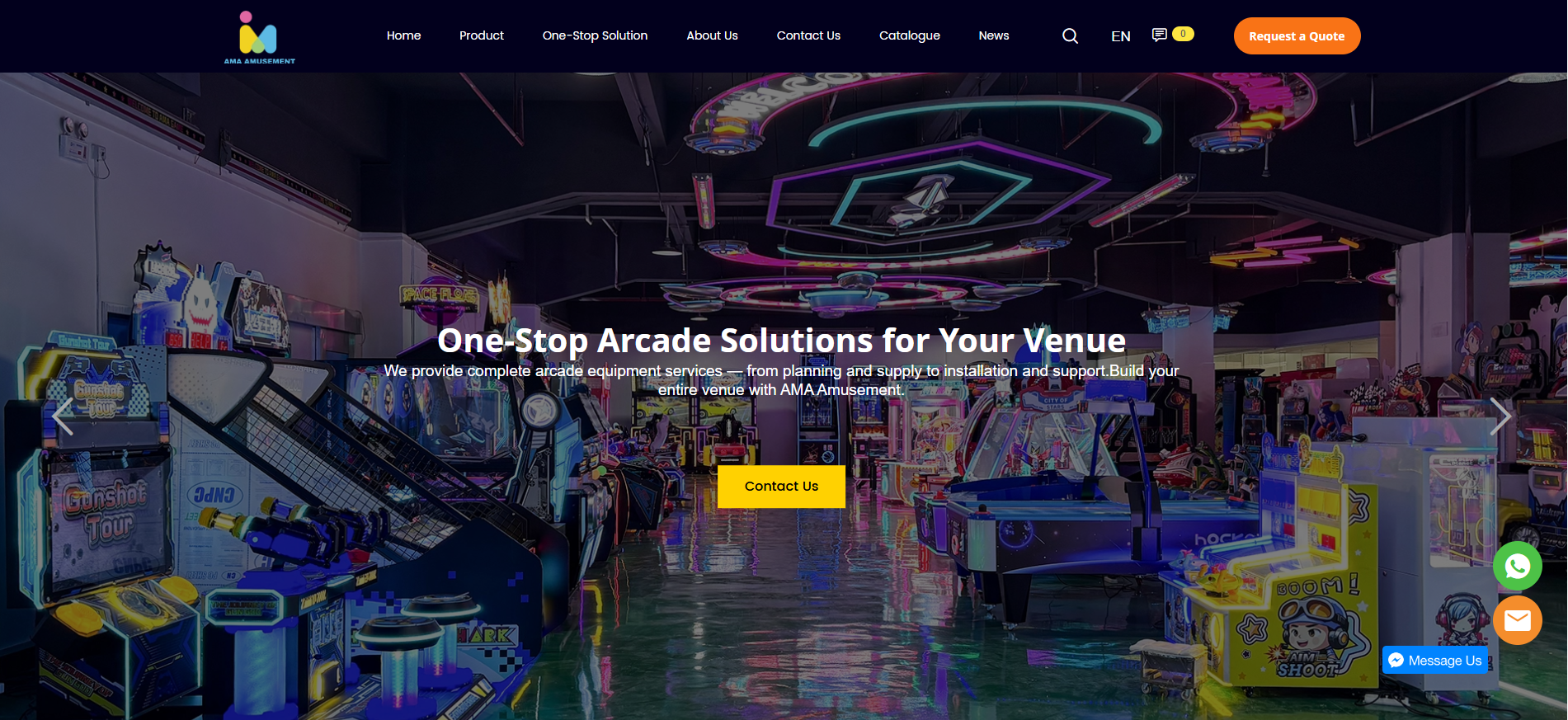
The best arcade machine manufacturer is not always the biggest name — it is the one that best matches your business goals.
For FEC owners, distributors, and investors, the real question is not only “Who sells arcade machines?” but “Who can help me build a profitable, reliable, and scalable entertainment business?”
Before choosing a supplier, consider what matters most: machine quality, earning potential, customization options, spare parts support, delivery reliability, and long-term cooperation.
A successful arcade business starts with the right equipment partner — one that understands your market, supports your growth, and helps you reduce risks from day one.
There is no single best manufacturer for every buyer. Raw Thrills is strong in branded video games, ICE and Bay Tek are strong in redemption, Stern leads in commercial pinball, and companies like Betson matter because they help buyers source, service, and integrate multiple brands. The right choice depends on venue format, guest mix, service expectations, and ROI goals.
Some are, some are not. Reliability depends less on country and more on factory discipline, QC, parts planning, communication speed, and post-sale support. Buyers should evaluate real production capacity, export experience, spare-parts systems, and compliance documentation instead of assuming that every supplier in one country performs the same.
IAAPA says operators should aim for at least $200 per game per week, and at that level many machines may pay for themselves in about 12–18 months. Actual ROI still depends on game mix, redemption setup, venue traffic, uptime, and reinvestment strategy.
IAAPA Funworld – Revenue Operations: Building an ArcadeThat depends on the destination market and machine type. Buyers often ask about CE and RoHS, and may also need to review other applicable electrical or market-entry requirements depending on the country, venue, and configuration.
Trade.gov explains that Incoterms define the responsibilities, costs, and risks between buyers and sellers in international trade. FOB, CIF, and DDP differ mainly in who arranges transport, insurance, duties, and delivery responsibilities. Buyers should compare them based on landed-cost strategy and import handling capability.


